
Prosecutorial Misconduct in Louisiana: A Call to Take Noble Steps to End This Massacre and Overlooked Crime of Violence
JustSouth Monthly Issue 173 | October 2026


In 1868, a political hurricane was forming in Louisiana. Formerly enslaved Blacks had been existing as citizens for just three years. They had made remarkable strides in that short span of time, especially relative to political rights −voting, jury service and office holding. That year, the first Republican governor and the first Black Lieutenant Governor was elected.1 Democrats were angry.2 But nothing was more rage-producing than the adoption of the Constitution of 1868. Forty-nine Black delegates participated in this constitutional convention.
The Constitution of 1868 resulted in the nullification of the 1861 ordinance of secession; conditional disfranchisement of Confederates; adoption of the state’s first bill of rights; the express prohibition against racial discrimination in schools and public transportation; abolishment of Black Code laws and the literacy test; and, racially proportional representation. This sent the eye of this political storm in the direct path of St. Bernard Parish.
The impending November 1868 presidential election added moisture to the political forecast. It was the first election since the end of the Civil War. To Blacks, the completion of Reconstruction was contingent on Republican candidate Ulysses S. Grant winning. Democratic candidate Horatio Seymour, who dubbed himself the “White Man’s Candidate,” had the support of Democrats, many of whom were former Confederates.
This political hurricane made landfall on October 25, 1868.3 During the St. Bernard Parish Massacre, an unknown number of Blacks fell victim to “Butchery.”4 From October 25-27, white mobs broke into homes and shot residents, conducted executions in the streets, seized weapons from Blacks, took other property at will and killed those who tried to intervene. Violent incidents were also occurring leading up to the massacre, such as the murder of Eugene Lock, a Black man. Lock was killed because he refused to cheer for the Democratic candidate when a group of whites told him to. Because the best indicator of future violence is past violence, I declare this 158-year-old case of domestic terrorism more than a painful memory this October.
The devastation that resulted from the 1868 massacre is visible and attributable to identifiable individuals – this is physical direct violence (DV). Structural violence (SV) is a stark contrast. SV recognizes that people can be harmed, victimized, traumatized, and injured by institutions and systems. SV causes people to be disadvantaged by systems because of how advantages, resources, and opportunities are allocated between groups.
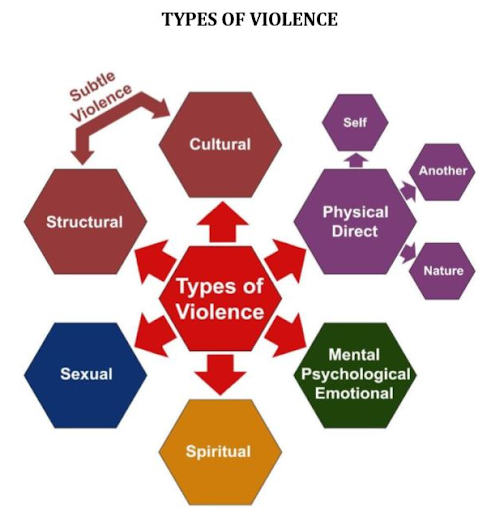
To many, Louisiana’s legal system is a violent battlefield. To them, it is a site of SV where massacres of a different nature happen. If it is true that the past should be a guidepost and not a hitching post, unhitching is overdue. Doing a body count of the victims5 of Louisiana’s legal massacre − prosecutorial misconduct − is a necessary starting point.6
In the instance of the 1868 massacre, Blacks identified the white domestic terrorists. None were arrested. In fact, no one has ever been held accountable for this massacre. Contrarily, over sixty Blacks were arrested for the two murders they were alleged to have committed during this massacre. It did not matter that federal officials investigated and concluded they lawfully defended themselves from an imminent attack. They were still charged. The vindictive and wrongful charging of these Black victims is a dated case of misconduct.
Prosecutorial misconduct appears in many forms, such as: threatening witnesses so they do not testify; not reporting known misconduct; using false or unreliable testimony; wrongful or over charging; vindictive or selective prosecution; withholding or delaying the release of exculpatory evidence; mishandling or destroying evidence; using questionable experts; making misrepresentations during plea negotiations; improprieties before or during the grand jury; discriminatory jury selection; contaminating jury pools by releasing false or inflammatory media statements; or making improper or misleading statements to the jury.
At the time of the 1868 massacre, Republican Judge Dr. Anthony G. Thornton was the elected judge of St. Bernard Parish. In the aftermath of the massacre, P. Toca surfaced and claimed the authority of the office despite never having been elected. Toca issued the arrest warrant for the Blacks and proceeded to hear the evidence and determine the case. Federal officials protested:
"[T]here is but one parish judge…duly empowered to act as such, and that person is Judge Thornton. P. Toca had not taken the eligibility oath prescribed by law, yet he arrogated to himself the power to act... The informality of Toca’s proceedings appear to have the matter made a farce within itself."7
After their release, Toca again acted without lawful authority and rearrested one of the accused only to later abandon the new charge. The attorney general issued a letter stating that Judge Thornton was the lawful office holder. His power was restored, but never fully respected. Judge Thornton lamented that it was impossible for him to act as parish judge because his orders were disregarded by the clerk, sheriff, and constables.8 Eventually, he would tell federal officials that a fair trial for the accused Blacks was an impossibility.
Just as this misconduct was tolerated in 1868, there is also a culture of tolerance for official misconduct today.9 Darrell J. Robinson’s case illuminates present realities.10 Robinson was convicted and sentenced to death in 1996. The state failed to disclose a significant amount of evidence (and later, through new prosecutors, stipulated to this). The suppression is documented in a record that parallels a basketball on a court. It bounced up and down the hierarchy of courts granting many judges reason and opportunity to recognize the injustice to the accused, the harm to the entire legal system, express outrage over the suppression of evidence in the case, and/or to insist on accountability for the offending prosecutors. Most did not.
In almost robotic form, the majority of the Louisiana Supreme Court discussed whether materiality should be decided separately instead of cumulatively as if a one cent coin was at issue. Attention to the individual or public harm that prosecutorial misconduct does was as absent as the respect for Judge Thornton’s authority.11 Two justices did take noble steps toward justice.
In one of his dissents, Justice John L. Weimer questioned “how many of the numerous evidentiary omissions” were “constitutionally tolerable.”12 He then called the violence what it was−a whopping “nine-pages” of suppressed evidence, “undisclosed evidence,” “material” and “the only evidence” of murder. He called for a new trial since, in his view, the first one was not fair.
Justice John Michael Guidry also dissented, calling for a new trial in the face of “wrongfully withheld” evidence.13 Justice John Guidry insisted that due process mandated a process where a jury could evaluate the evidence that Robinson was lawfully entitled to and then render a fact-finding. Justices Weimer and Guidry represent a departure from the norm in two significant ways. First, they did not do what is commonly done, which is respond by not responding, and look but not notice. Second, they displayed an understanding of the fact that SV happens when a structure causes a preventable harm. They seemed to have recognized that SV is harm perpetuated against individuals through the normalization of inequities embedded in systems.14
Tragically, the lawyer discipline process is also a site of violence when it comes to prosecutorial misconduct. Roger W. Jordan’s case illuminates the shortcomings there.15 Jordan prosecuted 17-year-old Shareef Cousin in a death penalty case in 1996. A disciplinary complaint was filed following Cousins’ conviction, which made him the youngest person condemned to death in Louisiana. The Louisiana Supreme Court had no trouble concluding that a Brady violation occurred. The struggle involved what to do about the prosecutor’s transgression. Most Louisiana Supreme Court Justices agreed to impose an insulting three-month suspension in a case that resulted in a child being wrongfully sentenced to death and incarcerated at Angola. To inflame matters, they agreed to defer the suspension, reasoning that Cousins did not experience an actual injury since his conviction was ultimately reversed.
Only three justices refused to partake in the violence against Cousins. Justice Weimer voted to grant a rehearing. Justice Bernette Johnson concurred to express disdain for the majority’s reasoning and outrage over the absence of accountability. She made an impactful case for why wrongful conviction was itself an actual injury. Hidden in the recesses of this case is reference to a letter that Honorable Calvin Johnson penned as a criminal court judge observing a pattern of Brady violations on the part of staff employed by District Attorney Harry Connick, Sr.16
Prosecutorial misconduct is to Louisiana today what massacres were to Louisiana during Reconstruction. Louisiana has the sixth most Brady violations nationally—and the second most per capita—as well as “especially high numbers of ‘bad faith’ violations.”17 According to Innocence & Justice Louisiana, “When the State of Louisiana convicts an innocent person, it is twice as likely that the prosecutor has committed misconduct than the national average; in almost seventy percent of Louisiana exonerations, police or prosecutors illegally withheld evidence; and, half of all U. S. Supreme Court reversals for Brady violations are from Louisiana.” Prosecutorial misconduct is Louisiana’s pandemic.18
The best way to commemorate the 1868 massacre is to use it as a guidepost. We do this by first recognizing the interrelatedness of violence. SV is as deadly as the gunshots and knife-blows during the 1868 massacre. Prosecutorial misconduct is structural; it is embedded and interwoven into our legal system. SV leads to direct violence (DV). DV reinforces SV and cultural violence, leading to a never-ending cycle of violence. Since SV is built into systems by way of attitudes, policies, customs, practices and laws, I next urge:19
- Implementing psychometric evaluations, psychological, or personality assessments as a condition of employment for prosecutors.
- Implementing mandatory 7-day sabbaticals annually where the prosecutor (alone and not with colleagues) spends at least:
- 3 days in service to agencies that serve victims of state harm
- 1 day completing credible trauma training, bias training or professional counseling relative to these topics
- 1 day observing the justice-impacted inside a prison or jail
- Adopting formal policies that require DAs to refer misconduct cases for criminal prosecution.
- Adopting formal policies that require judges to refer misconduct cases to the Office of Disciplinary Counsel.
- Imposing mandatory discipline when a prosecutor commits prosecutorial misconduct.20
- Using the “Brady List Forms” to submit names of prosecutors and other Brady violators to the database to ensure public awareness of offending prosecutors.21
- Greater use of and attention to United Nations standards and norms.22
- Ending immunity. Because of the nature of the job, absolute immunity is granted to prosecutors so they are not able to be sued civilly for things done when they are acting as advocates.23
- Prosecute prosecutors who engage in official misconduct (by viewing this both as a crime and an act of violence).24
Massacres and domestic terrorism became so normalized that the issue of liability for losses resulting from public violence made its way to the halls of congress three years after the 1868 massacre. Within that debate lies my final insight. One member of congress said:
"The disorders in the South are not like the disorders in many other States… The slaying of men there [are] one step in the process of a systemic plan…not to leave…a brave white man who dares to be a Republican or a colored man who dares to be a voter…. I have no doubt that there are many people who are pained at the severity and cruelty of these political methods, they…encourage and tacitly consent to them by inaction. The white people of the South…could have peace, order, quiet, liberty, protection of life and property…in two weeks if they only would. They and their…allies are accessory…by the very fact that they suffer them to go on without taking any noble steps to end them."25
Use the past as a guidepost. Don’t be an accessory to this crime of violence. Don’t consent by inaction. Take noble steps. Stop this massacre.
About the Author
Angela A. Allen-Bell is a respected local, national and international legal scholar and expert on the interplay between race and justice. It was her research that catapulted the movement to end the use of non-unanimous juries in Louisiana. And she is one of the founding members of the advocacy team that led this effort to reform Louisiana’s jury system through the adoption of legislation requiring unanimous juries in criminal trials in Louisiana state courts.
She holds the B. K. Agnihotri Endowed Professorship at Southern University Law Center in Baton Rouge, Louisiana and she serves as director of the law center’s Louis A. Berry Institute for Civil Rights, Human Rights and Social Justice. Professor Bell has the distinction of having worked on several other historic advocacy campaigns, such as the 50 th Commemoration of Students United and the 1972 Southern University student movement, the Angola 3 case, Soledad Brother John Clutchette’s case, Vincent Simmons’ case and the case of Robert Holbrook. She has also spent years engaging in narrative change work on behalf of the Black Panther Party and has become a formidable authority on the group’s history both in and outside of the United States. Professor Bell is an activist scholar who has made many media appearances and participated in many local, national and international collaborations to discuss her scholarship and advocacy work, including La Presse (France), Le Nouvel Observateur (France), MSNBC (News Nation with Tamron Hall), CBS News, NBC Nightly News, National Public Radio (All Things Considered) and Louisiana Public Broadcasting. When Louisiana Governor John Bel Edwards issued a posthumous pardon to Homer Plessy, Professor Bell was selected to speak as the legal historian for the occasion. Prof. Bell has even been published in or quoted in a range of print media sources, such as the Washington Post, Courthouse News Service, Capital B News, Law 360, Russia Today TV, the New Yorker, the Huffington Post and the Advocate.
Professor Bell is a member of two highly selective, invitation-only societies: the National Black Lawyers-Top 100 and the Fellows of the American Bar Foundation, whose membership is limited to one percent of lawyers licensed to practice in each jurisdiction. She has been named: a “2026 Baton Rouge Community Leader” by the Baton Rouge Alumnae Chapter of Delta Sigma Theta Sorority, Inc.; a “Living Legend Award” Recipient; one of CIO Views Magazine’s “Top 10 Most Influential Leaders Making an Impact in Legal Industry”; a “Woman of Distinction” by the Girl Scouts Louisiana East; the Drum Newspaper’s “People for 2021” Honoree; a “Louisiana Leading Lady”; Recipient of the National Civil Rights Conference “Civil Rights and Social Justice Award”; and, following a national search, she was selected as a member of the first cohort of the Culture of Health Leadership Institute for Racial Healing.
Prof. Bell works on many fronts. She is an active member of Zeta Phi Beta Sorority (Theta Theta Chapter). She is the founder of The Justice Center 985, an organization that aims to: (1) educate and empower people on recognizing and negotiating systems that harm; and, (2) center the perspectives and experiences of people of color who interface with these systems. Professor Bell is also an author. She recently released a three-book series that begins with “Under Indictment: Race, Juries and Justice in Louisiana.”
The Louisiana Senate has described her as a “beacon of hope” whose “indomitable spirit” has “left an enduring imprint on the community.” The House of Representatives of the Legislature of Louisiana has commended her “for her achievements as a legal scholar” and has recognized and recorded “the tremendous pride and honor that she brings” to the state of Louisiana. Jeremiah 5:1, says “give me one who seeks justice.” Professor Bell has adopted this call as her personal edict. Her signature traits are her never-ceasing desire to fight injustice and her tireless commitment to dismantling racial hierarchies and systems that harm.
References
1 In 1868, Henry Warmoth was elected as the first Republican governor of Louisiana. His Lieutenant Governor, P.B.S. Pinchback, became the first Black governor in the U.S. At the time, Republican support came from Blacks and a few whites.
2 Democratic support came from some whites, Spaniards, Sicilians, and French.
3 The 1868 St. Bernard Parish Massacre is hereinafter referred to as “the massacre.” See Letter of The Secretary of War, 40th Cong. 18-45 (Recent Disturbances in Louisiana) (Nov. 27, 1868).
4 Butchery of Negros in St. Bernard Parish−The Arms Stolen in Arkansas in the Hands of New Orleans Rebels, N.Y. Times, Oct. 31, 1868, at 1.
5 In one of my books, I encourage change agents “to expand their definition of victim to include those who have been harmed by the carceral state because of prosecutorial misconduct; legislative failures; excessive sentencing; wrongful arrest, detention, prosecution or conviction; or, in other instances where they bear no fault in the circumstance. Consistent with restorative principles, victims should also include those who are forced to witness or vicariously experience the failures of the carceral state.” See Angela A. Allen-Bell, The Summons: Advocacy Insights for Systemic and Transformative Change 3-4 (2025).
6 In her 2026 Legal Guide to Prosecutorial Misconduct, Olivia Bennett defines prosecutorial misconduct “as any action or omission by a prosecutor that violates the defendant’s rights under the Constitution, statutory law, or the applicable rules of professional conduct, in a way that prejudices the fairness of the proceeding.”
7 See Letter of The Secretary of War, 40th Cong. 35 (Recent Disturbances in Louisiana) (Nov. 27, 1868).
8 Supplemental Report of Joint Committee of the General Assembly of Louisiana on the Conduct of the Late Elections, and the Condition of Peace and Good Order in the State 70 (1869).
9 In Louisiana, 77% of successful Brady cases required federal courts to intervene after state courts denied relief. See Jennifer Mason McAward, Understanding Brady Violations, 78 VAND. L. REV. 875, 939-940 (2025).
10 Robinson claimed the State breached its Brady obligations by withholding favorable evidence, including the following: a deal between the State and jailhouse informant Leroy Goodspeed in exchange for his testimony; handwritten notations on transcripts of interviews with witnesses; certain serology records; certain records pertaining to ballistics and ballistics investigations; investigative materials reflecting a consultation with a psychic; and, information obtained from eyewitnesses that was inconsistent with their trial testimony. See State v. Robinson, 397 So.3d 33 (La. Dec. 13, 2024); See also State v. Robinson, 413 So.3d 403 (La. June 27, 2025).
11 In an interesting juxtaposition, a SCOTUS justice recently took note of the situation in Louisiana. See Brown v. Louisiana, 143 S. Ct. 886, 888 (2023) (Jackson, J., dissenting from denial of certiorari) (noting that this Court has repeatedly reversed “Louisiana courts, in particular” for failing to enforce Brady); in writing about the Louisiana Supreme Court’s reviews in Robinson’s case, one author expressed that: that “the Louisiana court system has conclusively sentenced an individual to death by violating his due process rights.” See William Sadler, Death By Brady: A Case Analysis of State Ex Rel. Robinson v. Vannoy, 4 S.U. L. Rev. 1, 54 (2026).
12 See State v. Robinson, 397 So.3d 383-388 (La. Dec. 13, 2024) (Weimer, J. dissenting).
13 See also State v. Robinson, 413 So.3d 403, 404-7 (La. June 27, 2025) (Weimer, J. dissenting).
14 The term was coined by sociologist Johan Galtung in 1969; Suman Khanna Aggarwal, Types of Violence, WorldBeyondWar.org, May 22, 2020, available at Types Of Violence - World BEYOND War (last visited Oct. 6, 2026).
15 In re Roger W. Jordan, 913 So.2d 775 (La. 11/29/2005).
16 Brady v. Maryland, 373 U.S. 83 (1963) held that the State's suppression of evidence that is favorable to the accused after receiving a request for such evidence violates a defendant's due process rights where the evidence is material to either guilt or punishment, without regard to the good or bad faith of the prosecutors. The prosecution's duty to disclose favorable evidence applies to both exculpatory and impeachment evidence. Evidence is exculpatory when it establishes the defendant's innocence. Brady violations constitute reversible error only when actual prejudice to the defendant's case is shown; see also ABA Model Rule 3.8, Special Responsibilities of a Prosecutor; La Rules of Professional Conduct Rule 3.8, Special Responsibilities of a Prosecutor; The United States Attorneys’ Manual; and, The National Prosecution Standards.
17 Jennifer Mason McAward, Understanding Brady Violations, 78 VAND. L. REV. 875, 912-944 (2025).
18 For a more thorough discussion of this topic, see Angela A. Allen-Bell, Under Indictment: Race, Juries & Justice in Louisiana, p. 152-176 (2024); Because prosecutorial misconduct in Louisiana has reached epidemic proportions, it is impossible to compose an accurate and comprehensive list of victims. I share these instances for purposes of illustration and further study and with no intent to dishonor those not named: State v. Gravois, 234 So.3d 1151, (2017) (where court finds prosecutorial misconduct, but refuses to dismiss the indictment); State v. Walker, 567 So.2d 581 (1990) (held that drastic remedy of quashing indictment was not appropriate for nonmalicious, preindictment conduct of assistant district attorney in obtaining information and documents from defendant without informing him that he was suspect and without defendant's attorney's knowledge or consent); Smith v. Phillips, 102 S.Ct. 940 (1982) (where the dissent called it prosecutorial misconduct to withhold the fact that a juror was an active applicant for employment with the DA’s office and the majority says “nothing in this case suggests that the prosecutors' conduct was undertaken in bad faith…there is no evidence which to any degree points to a conclusion that any member of the District Attorney's staff, ... or any court officer, had a sinister or dishonest motive with respect to Mr. Smith's letter of application, or sought to gain thereby an unfair advantage over the defendant.”)
19 Training is a predictable reform suggestion. It is intentionally absent from my list. The website for the National District Attorneys Association says it provides resources and training to help prosecutors understand their ethical obligations and avoid misconduct. In Louisiana, there is a Brady training scheduled during the Fall 2026 Louisiana District Attorneys Association training. I suspect this isn’t the first. Another training in a state with alarming levels of prosecutorial misconduct is proof of why this is not offered as a solution. Trainings can be useful, but they can also be overrated. To decipher which it is, ask: (1) Is the training to school in how to follow the rules or is the training in how to circumvent the rules?; (2) what is the trainer’s record relative to prosecutorial misconduct?; (3) Does the training include the victim’s perspective (as in the victim of the prosecutorial misconduct)?; (4) Is the person being trained returning to an office where the training will be reinforced, supported, undermined, disregarded or devalued? Absent a personal denunciation of supremacist views, a personal commitment to de-biasing, a personal display of morals and integrity, training will be devoured by culture all day long.
20 Though it is not a common practice, there are instances where Louisiana prosecutors have been disciplined for or in connection with abusing the powers of the office. For example, see In re C. Mignonne Griffing, 17-0874, 236 So.3d 1213 (La. Oct. 18, 2017); In re Gregory F. Williams, Sr, 16-1253, 218 So.3d 1009 (Dec. 6, 2016); In re Edwin E. Burks, 2007-0637 (La. Aug. 31, 2007), 964 So. 2d 298.
21 Brady List Potential Impeachment Disclosure Database, giglio-bradylist.com, available at Contact | Brady List (last visited Oct. 12, 2026).
22 The Compendium of United Nations standards and norms in crime prevention and criminal justice contains the instruments in the area of crime prevention and criminal justice adopted by the international community in more than sixty years. They insist on disciplinary proceedings where an objective evaluation of prosecutorial misconduct is guaranteed, as well as prosecutors reporting violations of these standards to supervisors in the office, as well as to the ODC. They also tell prosecutors “not initiate or continue prosecution or make every effort to stay proceedings when an impartial investigation shows the charge to be unfounded”; they insist on prosecutors giving attention to the prosecution of crimes committed by public officials, particularly corruption, abuse of power, grave violations of human rights and other crimes recognized by international law”; that, in systems like ours where functions are discretionary, “guidelines to enhance fairness and consistency of approach in taking decisions in the prosecution process, including institution or waiver of prosecution” must exist.
23 I do my job as a professor with no immunity protections. Many other workers perform without immunity from suit.
24 Though it is not a common practice, there are instances where Louisiana prosecutors have been criminally charged for or in connection with abusing the powers of the office. For example, see In re Jackson, 09-2354 (La. 02/12/10); 27 So. 3d 273; In re Flitcher R. Bell, 2011-1330 (La. Oct. 7, 2011), 72 So. 3d 825.
25 The Reconstruction Amendments’ Debates (Alfred Avins ed, 2nd ed. 1974) 563 (42nd Cong., 1st Sess. April 14, 18, 1871) (Statement of Senator George F. Edmunds).
Monthly articles reflect the opinions of the authors and not necessarily those of Loyola University New Orleans. Please send feedback to jsri@loyno.edu.